Scranton · Lackawanna Valley · Wyoming Valley
Masonry waterproofing contractor in Scranton, PA
Stone foundations, brick, block, chimneys and downtown facades. We test where the water gets in before we quote, we match lime mortar to coal-era walls, and every price is published before you call.
- ■ Hose test and moisture map before any quote
- ■ Lime mortar matched on pre-1930 stone and brick
- ■ Breathable silane/siloxane sealing, never film
- ■ Same-day visits when water is coming in
Anthracite Masonry Waterproofing is a masonry waterproofing contractor serving Scranton, PA and the surrounding Lackawanna and Wyoming valleys.
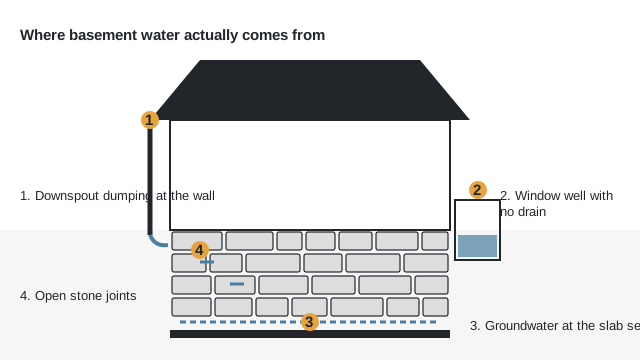
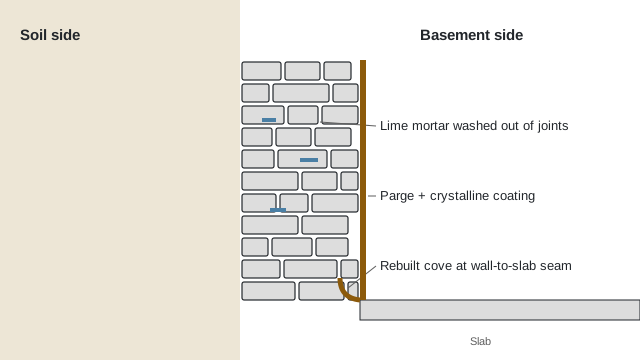
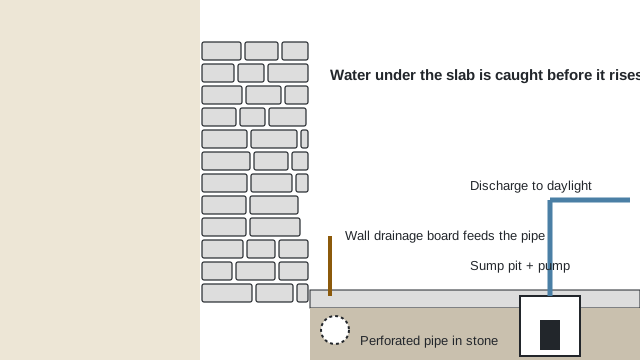
Waterproofing a wet stone or block basement wall in Scranton costs $3,000 to $8,000 for interior repointing, parging and a crystalline coating, and $4,500 to $12,000 when groundwater at the slab seam calls for interior drain tile and a sump. Most houses in the valley built before 1940 sit on rubble stone laid in lime mortar, and after a century of freeze-thaw winters that mortar has washed back to sand, leaving open joints as the main path for water. The right repair depends on which path is active: joints, the wall-to-slab seam, or pressure from grade outside. We run a twenty minute hose test on each wall with a moisture meter inside before quoting, so the number you get is for the problem you actually have. Exterior excavation with a membrane, $90 to $200 per linear foot, is reserved for walls the test proves are being loaded from outside.
Why Scranton masonry takes on water
The Lackawanna Valley was built in a hurry between 1870 and 1930, and it was built out of what was here: local sandstone and river stone for foundations, and brick from the valley yards fired softer than anything made today. Both are good materials. Both are also a hundred years old, and the lime mortar holding them together was designed to be sacrificial. It flexes, it breathes, and it slowly washes out. Every wet spring pulls a little more of it into the basement as sand.
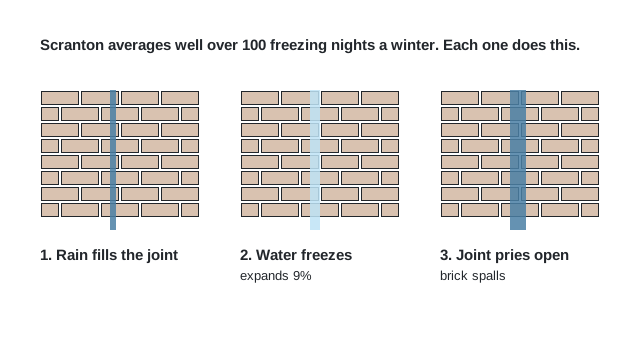
Then winter does the rest. Scranton averages well over a hundred nights below freezing, and water sitting in an open joint expands about nine percent every time it freezes. That is what pries brick faces off the weather side of a double and opens stone joints wide enough to see through. Add the ground itself, which over much of Lackawanna and Luzerne counties sits on abandoned anthracite workings, and you get foundations that have shifted just enough to crack a slab or open a corner. The state runs a mine subsidence insurance program for exactly that reason.
None of this means the house is failing. It means the masonry needs the maintenance it was designed for: joints repointed in a mortar that matches, water shed away at the top of the wall, and a breathable repellent on the brick so it stops drinking. That is the work we do.
Masonry waterproofing services, each with a published price
One crew, one price table. Every service below links to its own page with the symptoms to look for, the process step by step, and the range you can expect.
How a job goes from phone call to dry wall
- 1
Call or send the form
Tell us what you see: stone, block or poured, where the water shows, how old the house is. Photos by text help.
- 2
Hose test and moisture map
Twenty minutes of water on each wall while we watch inside with a meter. This finds the active path before anyone quotes.
- 3
Written price off the table
The number comes from the published cost guide with the line items that moved it. No pressure visit, no same-night decision.
- 4
Repair in the right order
Source first (spouts, wells, crowns), then joints, then cove and coating, then drainage if the test called for it.
- 5
Re-test and paperwork
The wall gets tested again, and you keep the product data sheets and the written warranty.
Masonry waterproofing prices in Scranton
The most common jobs and their ranges. The full table, with what moves each price and how to choose between interior and exterior work, is on the cost guide.
| Job type | Typical range | What moves the price |
|---|---|---|
| Exterior brick and stone sealing (silane/siloxane penetrating repellent) | $1,200 to $4,000per house ($2 to $5 per sq ft) | Wall area, how much repointing has to happen first, two-story access, soft coal-era brick that drinks more product |
| Repointing and tuckpointing | $1,500 to $6,000per job ($10 to $25 per sq ft) | Joint depth, lime mortar matching on pre-1930 walls, scaffold height, how much loose brick has to be reset |
| Stone foundation interior waterproofing (repoint, parge, crystalline coating) | $3,000 to $8,000per basement | Linear feet of wall, how much rubble has to be raked and repacked, whether the floor slab needs a curb, access around utilities |
| Interior drain tile with sump pit and pump | $4,500 to $12,000per basement ($60 to $120 per linear ft) | Perimeter length, slab thickness, battery backup pump, discharge distance to daylight or a storm connection |
| Foundation crack injection (poured concrete walls) | $450 to $900per crack | Crack length, active water flow at the time of injection, polyurethane versus epoxy, number of cracks done in one visit |
| Emergency water intrusion visit (same day when water is coming in) | $250 to $450per visit, credited to the repair | Time of day, distance from Scranton, whether pumping or temporary sealing is needed on the spot |
Ballpark your wall in three questions
The numbers come from the same published table we quote from on the phone, so the range you see here is the range you hear later.
Typical range
$2,750 to $4,400
On a stone wall the hidden cost is old parge. If a previous owner skimmed the rubble with hard cement, it has to come off before the joints can be repointed, and that is the step that moves the price inside the range.
Brick and stone above grade: seal it so it can breathe
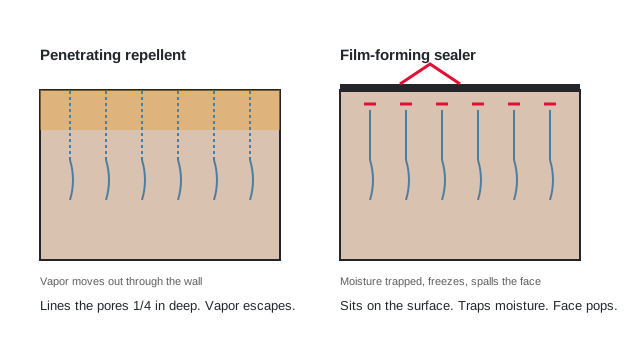
Coal-era brick absorbs more water than modern brick, and the wrong sealer makes that worse. A film-forming acrylic or urethane sits on the surface, traps the water that gets in through a sill or a joint, and lets it freeze behind the face. We use penetrating silane/siloxane repellents that line the pores a quarter inch deep, leave no film and no sheen, and let vapor out. The National Park Service says the same thing about water-repellent coatings on historic masonry in its preservation guidance.
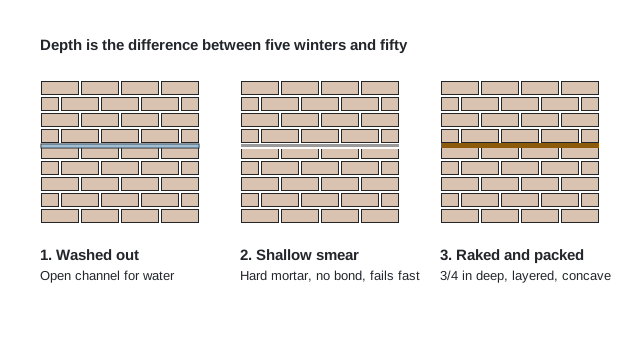
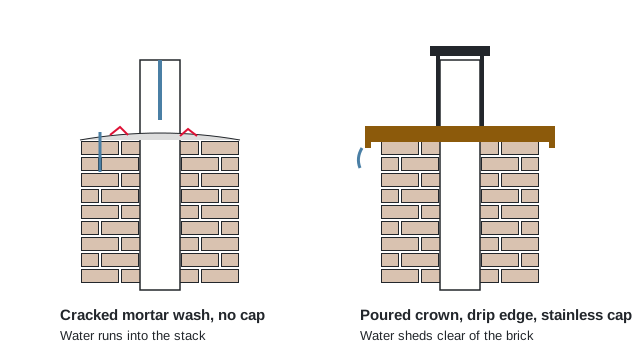
Sealing always comes after repointing, because a repellent cannot bridge an open joint. Joints get raked to depth by hand and packed in a lime-based mix on old walls, following the NPS repointing brief, then the wall cures a week and gets treated. Chimney crowns and parapet copings get fixed first on any job where they are the source, because sealing the sides of a wall that is pouring water in from the top is money spent keeping the water in.
Where we work, ranked by the masonry, not the map
Based in Scranton, and the towns below are listed by how much old stone, groundwater and mine ground each one carries. Every town page has its own pricing notes, streets we cover and questions we get.
- 1Dunmore, PAthe densest pre-1940 double-block stock in the county on rubble stone foundations
- 2Carbondale, PAthe oldest anthracite city in the region (settled 1820s
- 3Olyphant, PAMid Valley coal borough with near-total pre-1930 stock
- 4Taylor, PApatch-town stock from the Taylor and Pyne collieries on rubble foundations
- 5Old Forge, PApre-1930 borough stock on rubble stone
- 6Dickson City, PApre-1940 residential core along Main Street and Boulevard Avenue on stone foundations
- 7Throop, PAcolliery-town stock around the former Marvine and Pancoast workings
- 8Clarks Summit, PAa different problem set from the coal boroughs
- 9Pittston, PAGreater Pittston sits at the Lackawanna and Susquehanna confluence with a pre-1930 city core on stone
- 10Wilkes-Barre, PAthe Wyoming Valley seat
Questions Scranton homeowners ask first
- How much does masonry waterproofing cost in Scranton?
- Interior stone foundation waterproofing runs $3,000 to $8,000. Drain tile with a sump is $4,500 to $12,000. Brick sealing is $2 to $5 per square foot and repointing $10 to $25 per square foot. Crack injection is $450 to $900 per crack. Every range is on our cost page with what moves it up or down.
- Can a wet stone basement be fixed without digging outside?
- Usually, yes. Most stone basements in the valley leak through washed-out lime joints and the slab seam, both of which are repaired from inside with repointing, a rebuilt cove, parging and a crystalline coating. Excavation is for walls with water arriving under pressure from grade, and we tell you which you have after a hose test.
- What is the white powder on my basement wall?
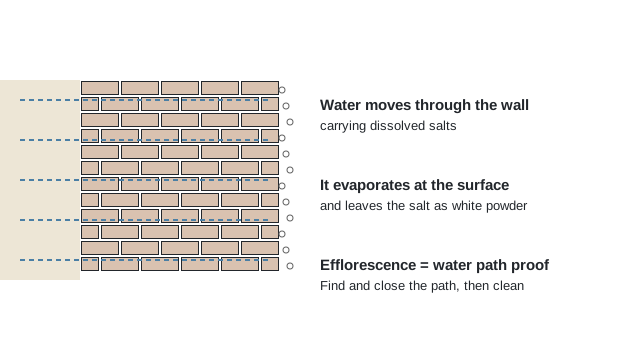
- Efflorescence: salts carried through the masonry by water and left behind when it evaporates at the surface. It is harmless itself, but it proves water is moving through the wall, and the joint or seam feeding it needs to be found and closed.
- Do you come out the same day if water is coming in?
- Yes. An emergency water intrusion visit is $250 to $450, same day in Scranton, Dunmore, Taylor, Old Forge and the Mid Valley, and the fee is credited in full to the repair.
- Is a foundation crack in Scranton a mine subsidence problem?
- Sometimes. Lackawanna and Luzerne counties sit over abandoned anthracite workings. A vertical crack that has not changed in years is shrinkage and gets injected. Stair-step or horizontal cracks, or any crack that changes with the season, get monitors first, and subsidence damage is filed with the Pennsylvania DEP insurance program rather than repaired quietly.
More on the full FAQ page.
Get a price for your wall
Address first, then a few details. We call back with a range off the published table and a time to run the hose test. Or call (570) 909-2820 now.