Masonry waterproofing cost in Scranton, PA
Every job type we do, the range it lands in, and what moves it. Written by the people who do the work, from jobs in the valley, and updated when materials change.
Masonry waterproofing in Scranton costs between $450 for a single injected crack and about $20,000 for a full exterior excavation with membrane and footing drain, and the two jobs most valley homeowners actually need land in the middle: interior stone foundation waterproofing at $3,000 to $8,000, and interior drain tile with a sump at $4,500 to $12,000. Above grade, brick and stone sealing runs $2 to $5 per square foot and repointing $10 to $25 per square foot. The single biggest driver on any of these is which water path is active, joints, slab seam or pressure from grade, and that is why we run a hose test with a moisture meter before quoting rather than pricing from the driveway. The second biggest driver on old walls is preparation: old hollow parge that has to come off, joints that have to be repointed before a sealer can go on, a chimney crown or coping that is feeding the wall from above.
The price table
| Job type | Typical range | What moves the price |
|---|---|---|
| Exterior brick and stone sealing (silane/siloxane penetrating repellent) | $1,200 to $4,000per house ($2 to $5 per sq ft) | Wall area, how much repointing has to happen first, two-story access, soft coal-era brick that drinks more product |
| Repointing and tuckpointing | $1,500 to $6,000per job ($10 to $25 per sq ft) | Joint depth, lime mortar matching on pre-1930 walls, scaffold height, how much loose brick has to be reset |
| Stone foundation interior waterproofing (repoint, parge, crystalline coating) | $3,000 to $8,000per basement | Linear feet of wall, how much rubble has to be raked and repacked, whether the floor slab needs a curb, access around utilities |
| Interior drain tile with sump pit and pump | $4,500 to $12,000per basement ($60 to $120 per linear ft) | Perimeter length, slab thickness, battery backup pump, discharge distance to daylight or a storm connection |
| Exterior foundation excavation, membrane, and footing drain | $7,000 to $20,000per side or perimeter ($90 to $200 per linear ft) | Dig depth, hand digging near porches and gas lines, disposal, landscaping restoration, one wall versus the full perimeter |
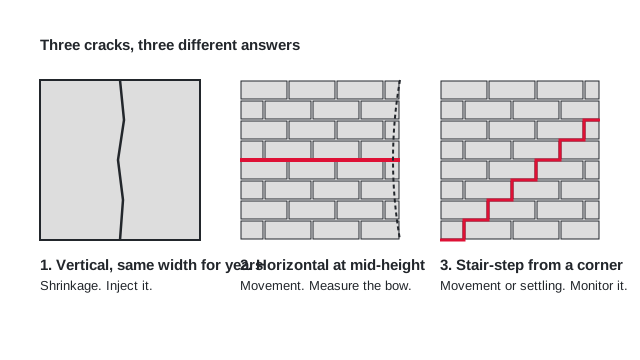
| Foundation crack injection (poured concrete walls) | $450 to $900per crack | Crack length, active water flow at the time of injection, polyurethane versus epoxy, number of cracks done in one visit |
| Chimney crown rebuild, cap, flashing, and waterproofing | $400 to $1,500per chimney | Crown condition (seal versus full pour), roof pitch, whether the top courses need relaying, flue count |
| Emergency water intrusion visit (same day when water is coming in) | $250 to $450per visit, credited to the repair | Time of day, distance from Scranton, whether pumping or temporary sealing is needed on the spot |
| Historic and commercial facade restoration and waterproofing | $25 to $60per sq ft, quoted per building | Lift or scaffold, stone versus brick, terra cotta or lintel replacement, sidewalk protection, historic district review |
| Basement window well, areaway, or stone stoop rebuild | $900 to $3,500per opening | Depth of the well, drain connection, matching original stone, whether the sill has to be replaced |
Ranges are for the Scranton, Lackawanna Valley and Wyoming Valley service area as of 2026. Your written quote lands inside the range for your job type or explains in writing why not.
What moves the price up or down
Pushes the price up
- Hard cement parge over rubble stone that has to be removed before the joints can be seen
- Water arriving under the slab, which turns a coating job into a drain tile job
- Two-story or lift access on facades and chimneys
- Lime mortar analysis and matching on pre-1930 walls, and historic review paperwork downtown
- Hand digging near porches, gas lines and sidewalks on exterior excavation
- A finished basement that has to be opened and closed back up
Brings the price down
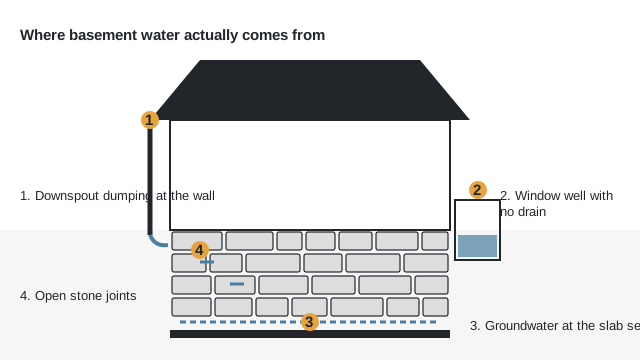
- Fixing the source first: a downspout extension or a window well drain often shrinks the masonry scope
- One wall instead of the perimeter when the hose test shows only one wall is active
- Several cracks injected in one visit
- Booking exterior sealing in May through October when the wall is warm and dry
- A clear basement: moving your own storage before the crew arrives saves a half day
- Doing repointing and sealing as one job instead of two visits a year apart
Interior or exterior: how we decide
- 1
Run the hose test
Twenty minutes of water on each exterior wall in turn while someone inside watches the joints, the slab seam and the cove with a moisture meter.
- 2
Name the path
Joints seeping means repoint, parge and coat from inside. Water at the slab seam means drain tile. Water arriving fast and high on one wall after the hose hits grade means that wall is being loaded from outside.
- 3
Check the source
Downspouts, grading, window wells, chimney crown, parapet coping. If the source is above or outside, it gets fixed first and the masonry scope shrinks.
- 4
Price interior first
Interior packages cost a third to a half of excavation and handle most valley basements. Exterior membrane is quoted only for walls the test proved are loaded from grade.
- 5
Write it down
The quote lists the path we found, the package that fixes it, the line items that moved the price, and what the warranty covers.
Permits, registration, insurance and mine ground
Pennsylvania requires home improvement contractors doing residential work over $500 to be registered with the Attorney General under the Home Improvement Consumer Protection Act. You can look any contractor up on the state HIC registration search, and our number is printed on every estimate. Ask for it from anyone who quotes your basement.
Lackawanna and Luzerne counties sit over abandoned anthracite mines, and ground movement over old workings is common enough that the state Department of Environmental Protection runs its own mine subsidence insurance program. Homeowner policies exclude that damage. If our inspection turns up a crack that is moving, a slab corner that has dropped, or a wall out of plane, we say so and point you at that program before selling a repair, because a coating over a moving wall is money wasted.
On pre-1930 stone and brick we follow the National Park Service guidance on repointing historic masonry: mortar softer than the unit, joints raked to depth by hand, profile matched to the original. It costs a little more than a bag of Type S and it is the difference between a repair that lasts and brick faces on the sidewalk in five winters.
Maintenance that keeps you off this page
- Downspouts extended at least six feet from any stone or block wall, and checked every fall
- Window wells with a working drain and a cover
- A walk around the weather side of the house each spring looking for joints you can scratch with a key
- Chimney crown and cap looked at every couple of years, especially on unused coal flues
- Sump pump tested before spring, with a battery backup anywhere near a creek or the river
- Brick re-treated with a penetrating repellent every eight to twelve years
Town by town notes on what tends to fail where are on each area page: Dunmore, Carbondale, Olyphant, Taylor, Old Forge and the rest of the list.
Cost questions
- Why publish prices when every other contractor says it depends?
- Because it does depend, and the table says on what. A range with the drivers next to it lets you compare quotes and spot the one that is off. The number we give after the hose test lands inside the published range or we explain why in writing.
- Is the hose test free?
- The test is part of the estimate visit and there is no charge for it on a scheduled inspection. An emergency visit when water is actively coming in is $250 to $450 and is credited to the repair.
- Do you charge more for Wilkes-Barre or Carbondale than for Scranton?
- No. The table is the same everywhere we work. Distance only shows up on the emergency visit fee, which runs toward the top of its range for the farthest towns.
- Will homeowner insurance pay for any of this?
- Rarely. Standard policies exclude seepage, groundwater and ground movement. Damage from abandoned mine subsidence is covered only by the separate Pennsylvania DEP mine subsidence insurance, which is inexpensive and worth carrying anywhere in the valley.
- Do I need a permit for basement waterproofing in Scranton?
- Interior repointing, coatings and drain tile usually do not need a building permit. Exterior excavation near a sidewalk, a sump discharge to a storm connection, and any work on a contributing building in a historic district do. We pull what is needed and it is a line on the quote.
- What does the warranty cover?
- Injected cracks and interior drain tile systems carry a written warranty against re-leaking through the repaired area. Sealing carries the manufacturer warranty on properly prepared masonry, ten years on the products we use. Repointing is warranted against failure of the joint, not against new movement of the wall.
Price your wall off this table
Send the address and what you see. We call back with the range for your job type and a time for the hose test. Or call (570) 909-2820.