Stone foundation waterproofing in Scranton
Waterproofing a rubble stone foundation in Scranton runs $3,000 to $8,000 for interior repointing, parging and a crystalline coating, and $4,500 to $12,000 when the basement also needs interior drain tile and a sump. Most houses built before 1940 in the Lackawanna Valley sit on fieldstone or cut stone laid in lime mortar, and after eighty to a hundred winters that mortar has washed back into sand. Water does not come through the stone. It comes through the joints, the cold seam where wall meets slab, and the hollow pockets where rubble fill has settled. The right fix depends on which of those three paths is active, and we test for that with a hose and a moisture meter before quoting. Exterior excavation is the last resort, not the first, because most stone basements dry out from the inside for a third of the price.
Part of the Anthracite Masonry Waterproofing service list for Scranton. Full ranges on the cost guide.
What you are probably seeing
- ■Sand and grit on the floor along the base of a stone wall
- ■White crusty efflorescence on fieldstone or the parging over it
- ■Water pooling at the seam between the slab and the wall after a hard rain
- ■A damp musty smell that gets worse in March and April
- ■Old parging that sounds hollow when tapped and sheds in plates
- ■Stones you can wiggle by hand in the top three courses
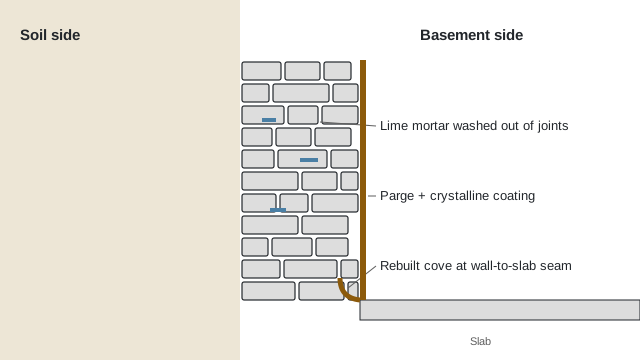
Why coal-era stone basements leak
Scranton, Dunmore, Carbondale and the Mid Valley boroughs were built fast between 1870 and 1930, and the foundations under those doubles and singles are mostly local sandstone and river stone laid two feet thick in lime mortar. Lime mortar is soft on purpose. It flexes with the wall, and that is why these foundations are still standing. The trade off is that lime washes out. Every wet spring pulls a little more of it into the basement as sand, and the joints get deeper until surface water off the yard has an open path inside.
Two local conditions make it worse. Lackawanna County sits over abandoned anthracite workings, and the Pennsylvania DEP mine subsidence program exists because ground movement over those workings is common enough to need its own insurance. Even small settlement opens stone joints. The second is freeze-thaw. Scranton sees more than a hundred nights below freezing most winters, and water sitting in a deep joint expands about nine percent each time it freezes, prying the stone apart a little more.
Interior repair first, excavation only when the test says so
Most stone basements can be made dry from the inside. We rake the failed joints back to sound mortar, repack them with a lime-compatible mix that stays breathable, rebuild the cove where wall meets floor, and finish with a cementitious crystalline coating that grows into the pores of the stone and blocks water under pressure. That package handles seepage through joints, which is the most common complaint.
When water comes up at the floor seam under pressure, or the slab is floating on a wet gravel bed, the fix is interior drain tile. We cut a channel at the perimeter, set perforated pipe in stone, and run it to a sump with a pump rated for the flow. When the outside grade is pouring water at the wall, or a porch or driveway sits directly on the problem, exterior excavation with a membrane and footing drain is the right answer, and we will tell you when it is.
How the job runs
- 1
Water test and moisture map
A garden hose on each exterior wall for twenty minutes while we watch inside with a moisture meter. This tells us which wall and which path is active before anyone quotes.
- 2
Rake and repoint
Failed lime mortar is raked back to sound material and the joints repacked with a breathable mix that matches the strength of the stone.
- 3
Cove and coating
The wall-to-floor seam gets a rebuilt cove, then the wall is parged and coated with a crystalline waterproofer.
- 4
Drainage when needed
If the test showed water under pressure at the slab, interior drain tile and a sump go in before the coating so the system works as one.
What this work costs in Scranton
| Job type | Typical range | What moves the price |
|---|---|---|
| Stone foundation interior waterproofing (repoint, parge, crystalline coating) | $3,000 to $8,000per basement | Linear feet of wall, how much rubble has to be raked and repacked, whether the floor slab needs a curb, access around utilities |
| Interior drain tile with sump pit and pump | $4,500 to $12,000per basement ($60 to $120 per linear ft) | Perimeter length, slab thickness, battery backup pump, discharge distance to daylight or a storm connection |
| Exterior foundation excavation, membrane, and footing drain | $7,000 to $20,000per side or perimeter ($90 to $200 per linear ft) | Dig depth, hand digging near porches and gas lines, disposal, landscaping restoration, one wall versus the full perimeter |
Every job type with what moves it is on the cost guide.
Questions about stone foundation waterproofing
- Can a stone foundation be waterproofed from the inside?
- Yes, and most of them should be. Repointing, parging and a crystalline coating stop joint seepage for $3,000 to $8,000 without disturbing porches, sidewalks or landscaping. Exterior excavation is reserved for walls with water arriving under real pressure from grade.
- Will you use regular Portland cement on my stone wall?
- Not for the joints. Hard Portland mortar on soft old stone traps water and makes the stone spall. We use a lime-compatible mix for repointing and reserve Portland-based products for the parge and coating layers where they belong.
- How long does the work take?
- A typical interior repoint, parge and coat on a Scranton double takes three to five working days. Adding drain tile and a sump adds two to three days. Exterior excavation on one side of a house is usually a week.
- Is water in my stone basement a mine subsidence problem?
- Usually it is a mortar and grading problem. If we see fresh stair-step cracks, doors that have started to bind, or a wall that has bowed, we will say so, and the Pennsylvania DEP mine subsidence insurance program is the place to file.
Get a written price
Address first, then what you see. We call back with the range and a time for the hose test. Or call (570) 909-2820.